6 Rules Meme Coin Traders Use to Turn Small Accounts Into Seven Figures
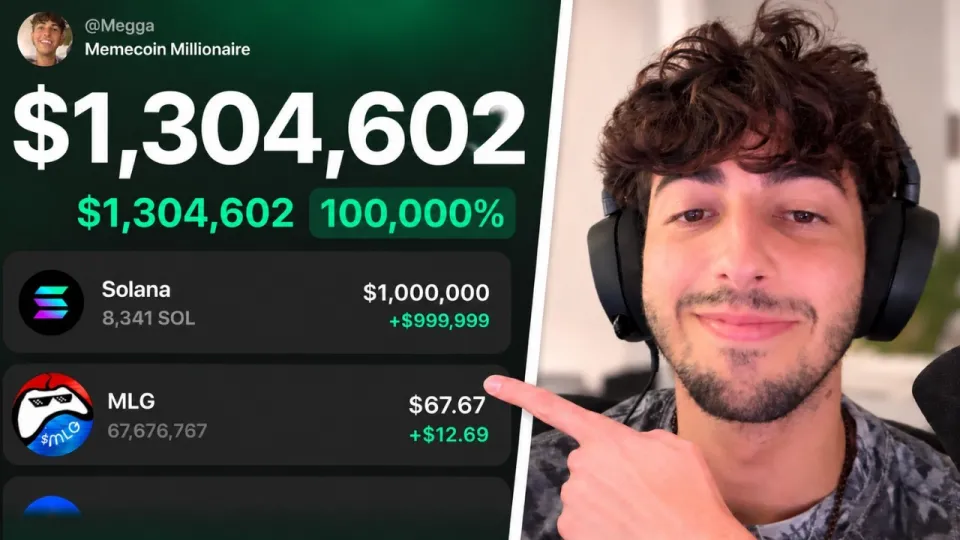
Video: How I Made $1,000,000 Trading Memecoins (FULL BREAKDOWN)
Want articles like this for your own video to promote it on YouTube and Google? Order them through the Telegram bot @sat_sit_bot. It writes articles around your video, embeds the video and publishes them on popular niche websites (no ads). Try it free: 50 articles on us.
· based on the channel Megga
Meme coin trading is a high-risk speculation game where profit comes from buying early attention and selling it to later buyers, not from fundamentals. In his breakdown of how he turned memecoin trading into a seven-figure result, Megga frames it as a full-time craft built on early entries, strict position sizing and survival through long drawdowns; the free course he links in the video is available at the Megga trading course checkout. The same material is useful even if you never touch a memecoin, because it describes how attention, liquidity and risk actually behave on-chain.
What meme coin trading actually rewards
Meme coin trading rewards speed and information flow rather than analysis of earnings or cash flow. A token has no revenue, so price is set entirely by the order book of new buyers: the earliest participants buy at a market cap of tens of thousands of dollars and later buyers pay for the story. That is why the traders who consistently profit are the ones who see a launch early, size the bet so a total loss is survivable, and exit into strength instead of waiting for a narrative to mature.
The uncomfortable implication, raised repeatedly in the comments under the video, is that gains are somebody else's losses. Anyone entering after a token has already run is providing exit liquidity for earlier holders. Treat that as the defining mechanic of the niche, not an accusation aimed at one trader.
Six rules that separate a run from a blow-up
These are the operating rules that show up again and again in serious memecoin accounts, and they map onto the way Megga describes his own process.
- Enter before the crowd. The edge is being early, typically while a token is still in the low tens of thousands of dollars of market cap. Once a coin is trending on social feeds, the easy part of the move is gone.
- Size for total loss. Every position should be small enough that going to zero does not change your month. Most launches fail, so a handful of large winners must carry a long tail of losses.
- Separate trading wallets from storage. Use a dedicated hot wallet with limited funds for trading and keep the rest offline. Phishing links and malicious token approvals drain wallets in seconds, and one drained wallet can wipe out months of gains.
- Track PnL in writing. All-time profit and loss, win rate and average position size tell you whether a strategy works. Screenshots of single wins do not.
- Set a drawdown limit. Decide in advance how much of the account you will risk before stepping away for the day. Traders who keep clicking after a bad streak are the ones who give back the whole run.
- Treat time as the real input. The nine-to-twelve-hour days described in the video are spent scanning launches, reading chats, checking holders and contracts, and reviewing trades. Screen time without a review loop produces nothing.
How much capital and time you actually need
There is no minimum balance that makes memecoin trading work, but there is a minimum amount of attention. A trader in the comments mentions an all-time profit and loss of roughly $45,000 and asks how to find people to trade alongside; the honest answer is that networking matters more than the number. Group voice chats, streams and public timelines compress the learning curve because you see how other traders react in real time.
Time is the harder constraint. Someone working a full-time job cannot replicate a twelve-hour scanning routine, and pretending otherwise leads to oversized bets made in a hurry. A realistic version is a fixed two-hour window, a written checklist, and smaller size until the process is consistent. Consistency of process is what compounds; hours alone do not.
Reading the risk before you buy
Risk control in memecoins starts before the entry and covers four things: contract, holders, liquidity and exit. Check whether the contract is renounced and free of mint or freeze functions, whether top holders are clustered wallets controlled by one person, whether liquidity is locked, and whether there is enough depth for your size to exit without moving the price against you.
A common failure described by traders is spotting a good token early and then not acting, or conversely chasing a coin after a 200x headline. The 200x outcomes are outliers that get amplified; the median launch returns nothing. Position sizing is what converts an occasional outlier into a durable account rather than a story.
The questions traders ask after watching a seven-figure breakdown
Three doubts come up most often. First, whether the results are repeatable: they are repeatable as a process, not as a number, because the specific tokens and timing will not recur. Second, whether the person sharing the breakdown is profiting from trading or from selling education: both can be true at once, so evaluate the free material on its own merits. Third, whether starting now is too late: memecoin cycles keep producing new launches, but each cycle rewards faster execution and better security habits than the last.
A practical answer to all three is to start with a small, fixed bankroll you can afford to lose entirely, log every trade, and only increase size after a documented profitable stretch. That approach works whether the market is hot or cold.
Useful links
- Free trading course from Megga
- Trading platform with low fees
- Megga on Twitch
- Megga on TikTok
- Megga on Twitter
Final takeaway
Meme coin trading is a liquidity game in which early entries, disciplined sizing and wallet security decide who keeps the money. Megga's breakdown is valuable less for the seven-figure headline and more for the unglamorous parts: long hours, repeated losses, and a process that survives drawdowns. Anyone treating a single 200x as a plan is likely to become the exit liquidity for someone else's. Start with the free course at the Megga checkout page, and follow the channel Megga for the full breakdown and further trade reviews.
Key takeaways
- Megga's breakdown describes turning memecoin trading into a seven-figure result, with 9–12 hour workdays cited as the baseline.
- Early entries in the $30k market-cap range are framed as the core edge, before a token reaches wider attention.
- A 200x on a single token is presented as an outlier, not a repeatable expectation; most positions end at zero.
- Wallet security is treated as a trading skill: phishing and drained wallets erase gains faster than bad entries.
- Liquidity is the structural risk: every realized profit comes from another participant buying higher.
Questions & answers
How much money do you need to start trading meme coins?
There is no fixed minimum, but the amount should be money you can lose entirely without changing your finances. Most traders start with a small dedicated wallet and increase size only after a documented profitable stretch. Position sizing, not starting capital, determines whether you survive a losing streak.
Is meme coin trading just taking money from later buyers?
In a practical sense, yes: a token with no cash flow pays earlier holders from the money later buyers put in. That makes early entries and exits into strength the core skill, and it means late buyers carry the most risk. Understanding this mechanic is the first step to managing it.
How do people lose money even after a big win?
Two common causes are wallet drains through phishing links or malicious token approvals, and giving back gains by oversizing after a winning streak. Keeping trading funds in a separate hot wallet with limited balance and setting a hard drawdown limit addresses both. Reviewing trades in writing also prevents repeating the same mistake.
Can you trade meme coins with a full-time job?
Yes, but not with a twelve-hour scanning routine. A realistic version is a fixed daily window of one to two hours, a written checklist for contract and holder checks, and smaller position sizes until the process is consistent. Time and consistency matter more than the size of the account.
Source: How I Made $1,000,000 Trading Memecoins (FULL BREAKDOWN) · Markdown version